
|
By: Katrina Huffstutler
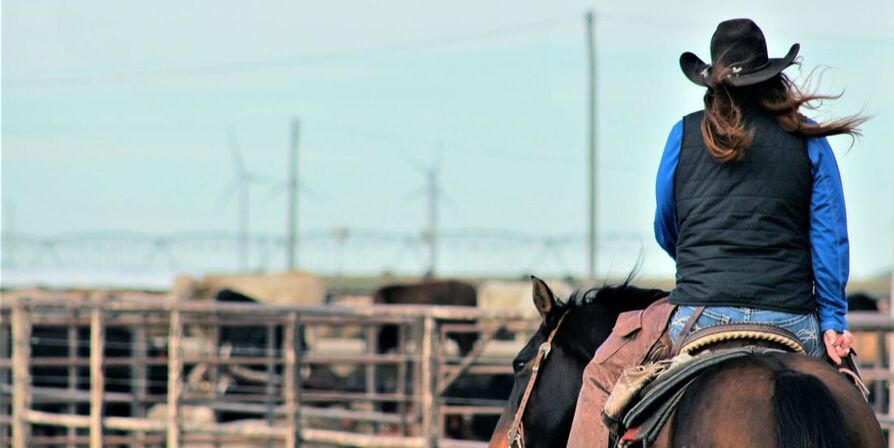
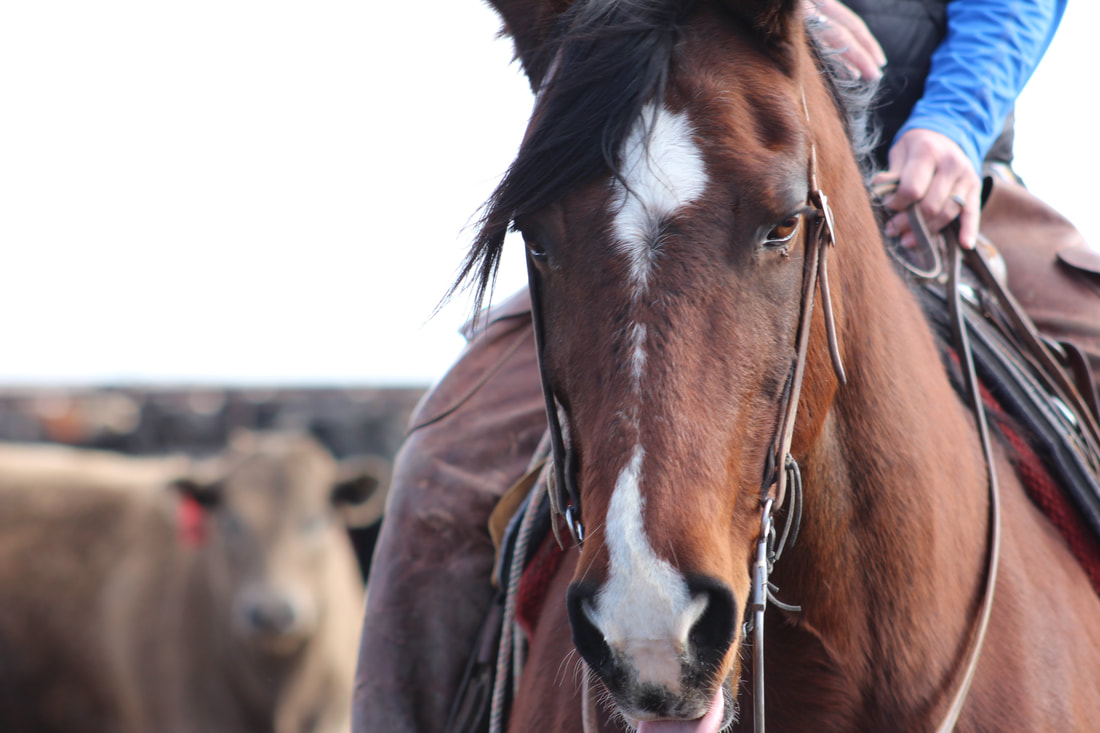
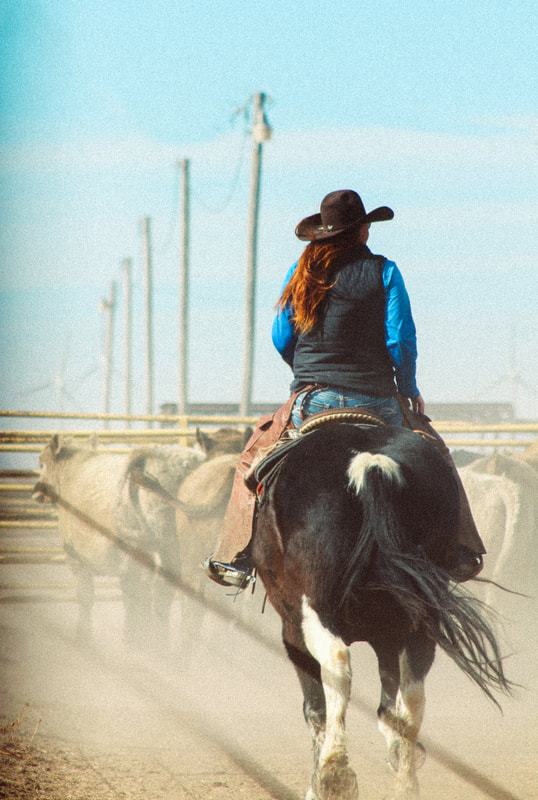
Jayme Fankhouser doesn’t remember a time in her life before she was horseback. But unlike most little girls who learn to ride, she made a career out of it.
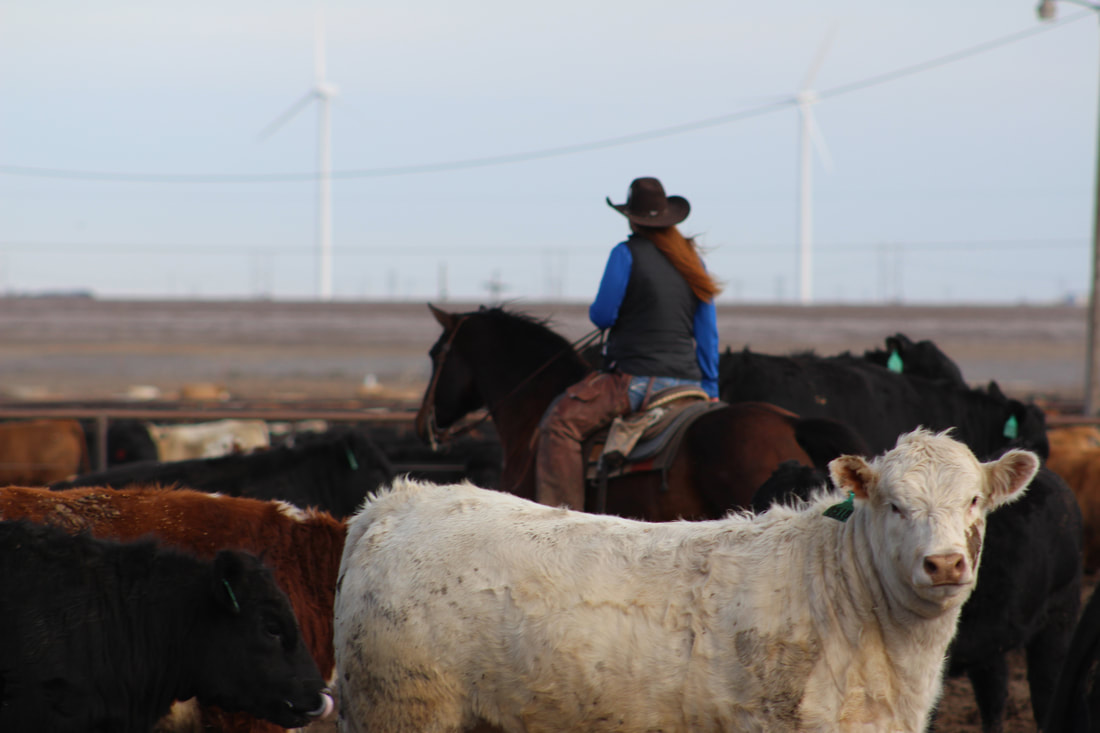
While no two days are the same for the pen rider, they always start early (she gets to work at 3:30 a.m. every Monday to prepare to ship cattle, closer to daylight the remaining days). By daylight, she’s riding the high-risk cattle, a responsibility she does not take lightly. “After the cattle leave my section, they will have been straightened out and ready for their new home,” she says. It’s an honor to look after the most fragile cattle in the yard, and even more impressive considering she’s one of very few females filling the role as pen rider. But she’s worked hard her whole career to be taken seriously, and never forgotten that the cattle come first. 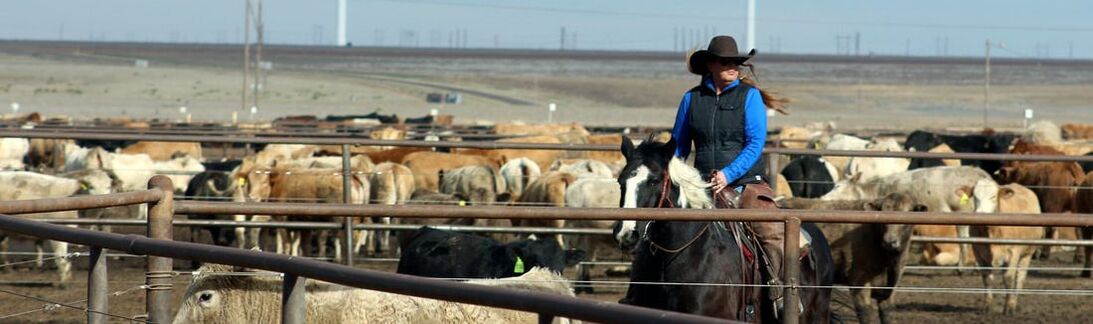
Even when it was scary starting out, she refused to give up on her dream.
“My father told me a long time ago, ‘You work in a male world, you’re going to have to work twice as hard to be noticed,’” Fankhouser says. “So I’ve gone those extra miles and I guess maybe I’ve established myself to the point where others take me seriously.” She says intuition, coupled with a natural nurturing side, make women a great choice as cattle caretakers. But the work is not easy. “You have to have thick skin, and you can’t be afraid of hard work or the elements,” Fankhouser says.
Despite the challenges, she’s the first to encourage other women to go for their dreams, no matter how unconventional.
“Women aren’t limited in the industry. We can be as successful as we want,” says Fankhouser, whose daughter also rides pens. “Whatever you set your mind to, if that's what you want to do, you can go do it.”
0 Comments
Getting from There to Here
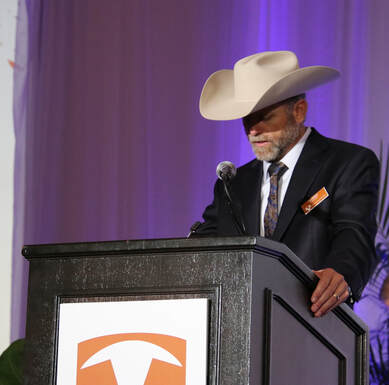
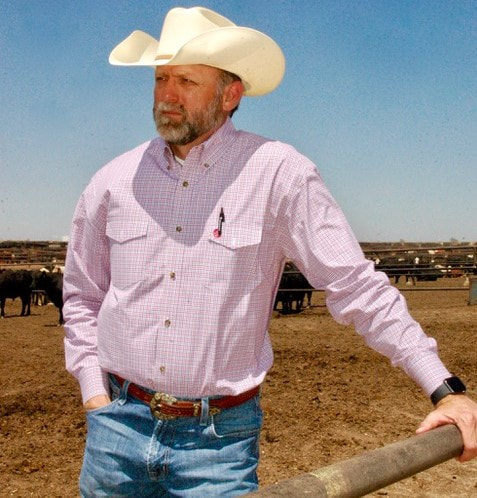
For Paul Defoor, the 2020 TCFA Chairman, the cattle business is a life-long passion. “I never seriously considered doing much else outside of working with cattle and horses,” he says. That resolve for the cattle industry goes back to his childhood. Growing up in southeast Texas, he spent his days either working with horses and cattle or alongside his dad and grandad at the sale barn. “I would watch calves being loaded onto trucks at the sale barns when I was a kid and wonder where they would end up,” he says. “Probably somewhere up on the High Plains where everything, it seemed to me, was bigger and better.” Defoor’s upbringing instilled in him a love for taking care of cattle. He is quick to credit both his dad and grandad for making sure he had the skills and experience to follow that passion. Upon graduating high school, Defoor took some basic college courses at Sam Houston State University. He spent that year roping and shoeing horses, but it wasn’t long before he made the trip out West. “The following year I loaded up my head horse, moved to Lubbock, and began studying animal science at Texas Tech University.” While at Tech, Defoor worked at area feedyards, took care of wheat pasture cattle and continued to shoe horses. “It made more money in the shortest period of time working than anything else a college kid with my background could do,” he says. While at Tech, Defoor became acquainted with a couple of feedyard nutritionists. “Their work fascinated me and really encompassed many of the things I loved,” he says. Defoor went on to graduate first in his class at Tech, and then on to West Texas A&M where he earned a master’s degree in ruminant nutrition and later, an MBA. He returned to Tech to complete a Ph.D. in ruminant nutrition working under Dr. Mike Galyean. “Dr. Galyean, who is now the Provost at Texas Tech, was a great mentor and is a great friend. He really shaped the way I think and the way I approach data,” Defoor says. Much of Defoor’s graduate work involved studying the interchangeability of roughage sources in feedyard rations — a topic that would play a major role in how feedyards would adapt to the most severe drought on record in the High Plains over a decade later. “The cattle I used in my doctoral studies were provided by Cactus Feeders,” he recalls. “That allowed me to get to know Cactus a little better — a connection I relished, and one from which I would later benefit immensely.”
The Cactus Call
The years that followed Defoor’s doctoral studies were filled with opportunities. He spent time as a professor, a technical services manager for a pharmaceutical company, and a nutritionist for several great feedyards on the High Plains. The opportunity with Cactus came in 2005 when he was doing some business analytics work for them on a project with beta agonists — a topic that framed his early years at Cactus as they hired him full time. “It didn’t take much thought to drop everything and go to Cactus full time,” he says. “They were, and still are, the epitome of the High Plains cattle feeding culture, and the Engler family offered something that had remained elusive to me — ownership in a feedyard.” “Not just one in this case but 10 yards feeding over a million head per year and the brand and culture that went along with it,” Defoor says. “This was where I wanted to be.” In 2000, the National Cattlemen’s Beef Association named Cactus the “Cattle Business of the Century.” Additionally, the organization was complete with the largest beef cattle research operation in the world. “Cactus Research is the industry leader in beef production science and has influenced many of our business decisions over the years,” he says. “I had several great mentors in my early years at Cactus. Paul Engler and Jack Rhoades were major influencers, and I still draw on many of their lessons,” he recalls. “They represented one side of my passion and romance for this business, while Dr. Mike Engler and Dr. Spencer Swingle, both scientists of the highest caliber, represented the other.” Early in his career, Defoor led the organization’s efforts to integrate research and business analytics for several years before being promoted to Chief Operating Officer, and later to Co-CEO and a member of its board of directors. In these roles, Defoor has had the privilege of hiring, placing, or helping develop some of the best cattle talent in the industry. “Cactus employees are cattle and customer focused both on and off the feedyard,” he says. Having customer-focused employees is key to Cactus’ success. “Our cattle feeding customers are the core of our business,” Defoor says. “Our identity is wrapped up in them and always has been. Our roots are in custom cattle feeding, and our future is there as well.” A saying around Cactus is “The Cattle Come First” meaning caring for cattle comes before our comfort and rest. Another saying is, “It takes more than concrete and steel to build a feedyard,” meaning the operation only works when you have the right people, Defoor explains. “These things (Customer Focus, Cattle Care, Right People) are the foundations of our culture, and that has not changed,” he says. What has changed is the amount of time and energy the organization spends in self-evaluation of various aspects of their business. Cactus Research plays a major role in that process on topics such as antibiotic resistance, greenhouse gas production, animal wellbeing and several others. This research routinely influences many organization and industry positions. “The confidence I have from our research efforts allows me to state strongly to anyone that U.S. beef producers can be proud of this business and the beef they produce,” he says. “We are part of the solution for the environment and a growing world population. “However, we can’t be content to sustain. We must advance and continue to improve. That’s what got us here,” he says.
The Association
Defoor first became involved with TCFA after he received a scholarship from the group’s education foundation. In later years he served on the TCFA Research Committee, and as he moved up in leadership at Cactus, he began serving on the TCFA board of directors and then the executive committee. When I ask what the biggest challenges are for the cattle feeding industry, he answers boldly. “We are blessed in this country with the highest standards of living that have ever been experienced by any society. We must be students of how we achieved that if we are to keep it and keep improving it.” Defoor points out that the industry must continue to make strong, simple and direct rebuttals to myths about beef production. “Take for example, the concerns about greenhouse gas emissions,” he says. “The simple truth is that cattle merely return carbon to the atmosphere where it originated literally only months prior. There is no ‘net new’ carbon emitted by cattle into the atmosphere. Cattle, plants, and carbon are in a healthy, steady-state, long-term relationship with one another, and we humans are the beneficiaries. It is just that simple.” “Industry associations such as TCFA are critical in dispelling misconceptions and bringing to bear the full collective resolve of its members around these basic truths,” he says. “We must ensure that the political process and its outcomes reflect those realities.” While the industry must continue to advocate about current issues including atmospheric carbon, alternative proteins, trade, and technologies that affect efficiency, Defoor says, we must also focus on the viability of the Texas cattle feeding region over the long haul and provide leadership in critical areas that will contribute to that future. “Farming choices and water use will be among the most critical of factors,” he says. “There is tremendous untapped potential to further integrate farming and grazing in the region to create greater returns per acre for landowners while drawing more cattle to the region to graze.” “We can do this while also allowing for a material recharge of the groundwater that is so critical to our future.” Undoubtedly, his analytical skills and passion for the industry and the region will serve Defoor well as he embarks on his position as TCFA Chairman. “To say Paul Defoor loves what he does would be a vast understatement,” says Ross Wilson, TCFA president & CEO. “He is a big picture thinker, who can also distill complex, scientific issues and communicate them in a way that people, not only understand, but also relate to.” At the highest level, Defoor’s life’s work is centered on improving standards of living through advancements in food production. He has dedicated years to the science of cattle nutrition and producing food for a growing population. There is no questioning his commitment to the industry and region he loves. However, spend time with him, and you’ll see that the scientist is also a husband, father and true cowboy who has a deep connection and relentless focus on the cattle, the success of his customers, and making beef accessible to families all over the world. |

About TCFA |
Get Involved |
|